Reflections from the Malawi–Zimbabwe Community Foundations Convening
18 – 19 February 2026
Nolwazi Ndlovu and Eddah Jowah
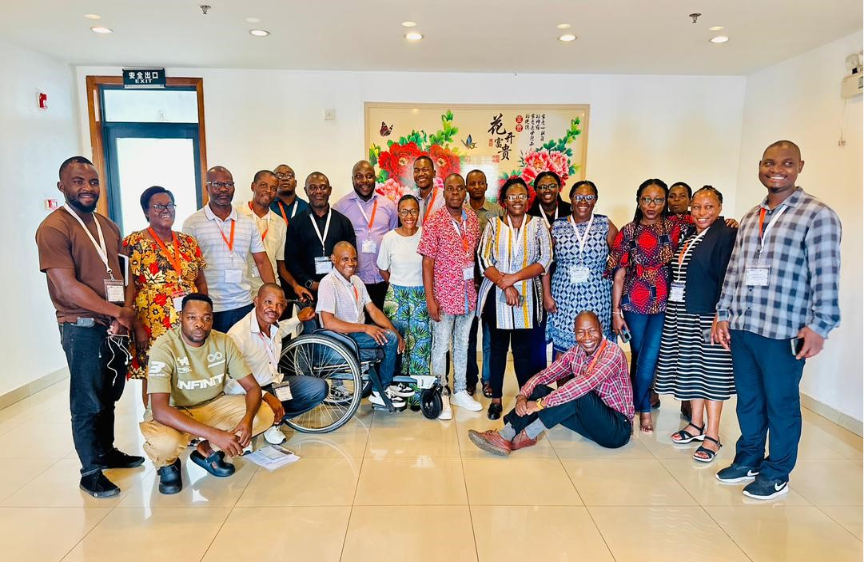
There is something deeply inspiring about bringing people together across borders, especially people who are doing the slow, often invisible work of building Community Foundations (CFs) from the ground up. The Community Foundations of Malawi and Zimbabwe Convening held in Lilongwe in February was exactly that kind of encounter: honest, revealing, and full of practical wisdom. It was two days of listening, learning, and reconnecting with what community philanthropy looks like. However, the biggest lesson that came out of the meeting, especially in relation to networks, is that networks grow at different speeds, and that is okay. The reflection in this blog captures that insight and others drawn from the conversations, exchanges, and experiences shared during the convening.
Networks grow and evolve at different speeds
One of the clearest revelations during the convening was that the Malawi and Zimbabwe networks are not developing at the same pace. However, both are evolving in ways that are meaningful and rooted in their own realities. The Malawi Network is largely self-driven. It interacts and convenes regularly, even beyond the support provided by SIVIO Institute and Mudzi Connect. This independence reflects a strong sense of ownership and initiative among its members. Malawi’s network is newer but highly energised, with consistent structure-building, membership contributions and a strong enthusiasm for formalisation. They have also set up a Facebook page to increase their visibility. Their approach reflects a context in which CFs are a relatively new idea, but one that communities are increasingly open to exploring.
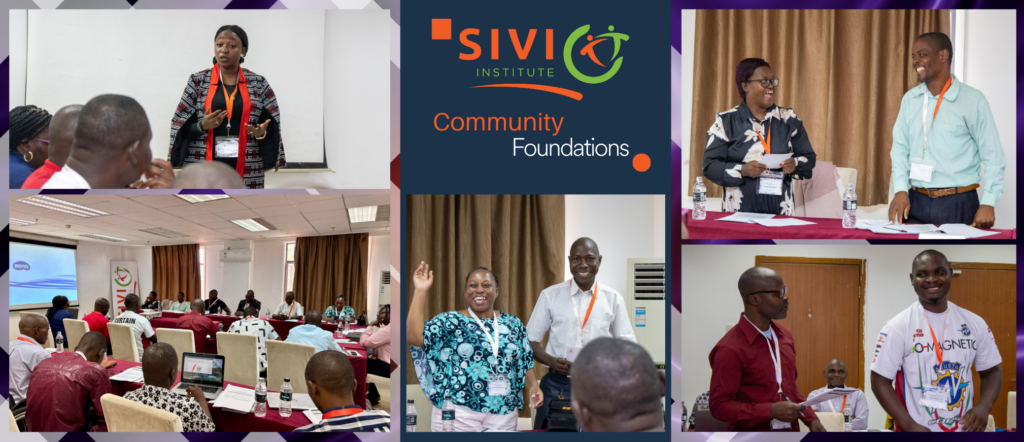
Zimbabwe’s network has existed longer, but its journey has been shaped by a more complex operating environment. Issues like registration requirements and shrinking civic space have significantly influenced the rhythm of network development. Yet Zimbabwe has deep experience in navigating difficult contexts and a strong culture of storytelling, community trust-building, and legacy-based philanthropy, with foundations such as the Community Foundation for the Western Region of Zimbabwe and Uluntu Community Foundation having been in existence for over 15 years.
The convening showed that neither network is ahead or behind. They are simply growing in different ways, informed by their histories, the personalities and organisations that make them up, and the regulatory environments they operate in. Most importantly, each had something to learn from the other.
People and organisations make the Network — not the structure
Another powerful insight was the reminder that networks are not their constitutions, registration certificates, or formal titles. They are communities of people and organisations that choose to collaborate. The heart of the network lies in the relationships among members. Trust is a more powerful glue than any legal framework. What sustains the network is people showing up, sharing stories, and learning from each other.
Trust binds community philanthropy
Across all the discussions and presentations, one theme consistently resonated in both the Malawi and Zimbabwe networks: trust and legitimacy are the glue that binds community philanthropy. CFs do not operate in isolation or build in a vacuum, but they are embedded within existing community structures that shape social life. Chiefs, village heads, and other community leaders hold immense influence, and when they endorse the concept of CFs, they mobilise entire communities to rally behind and support the work through donations, participation, and advocacy. These stories of trust and support are not accidental, nor have they been established overnight. They are the product of intentional, consistent delivery on each foundation’s mandate, showing up and demonstrating impact in ways that communities can see and feel. What emerged clearly is that legitimacy is not granted by external actors alone; it is cultivated within communities through relationships, accountability, and visible results.
Collaboration between Community Foundations and other ecosystem actors, including the government is important
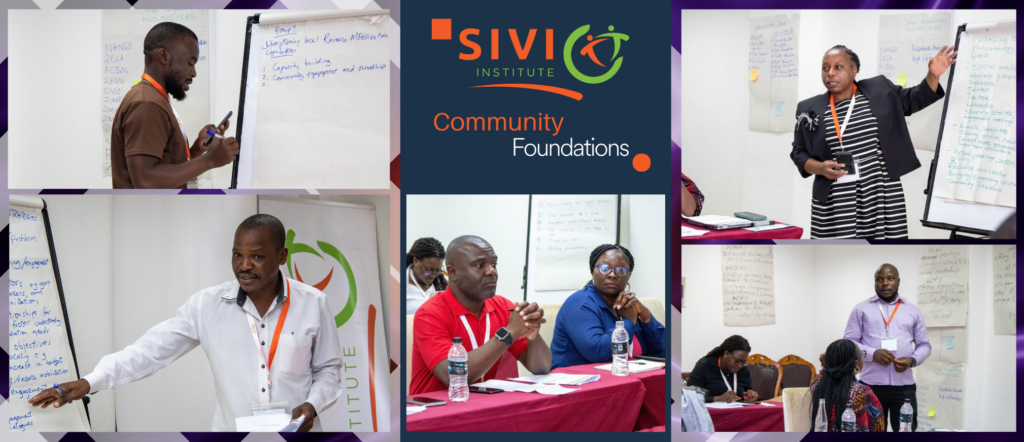
There is often tension between government and non-profit organisations, largely driven by perception. Non-governmental organisations (NGOs) are sometimes viewed as anti-government, while governments may see them as adversarial. Yet, when examined closely, both entities share the same ultimate goal: development. CFs in Malawi highlighted several examples of collaboration, noting that when they reached out, government institutions supported their activities. Similarly, the Manica Youth Assembly in Zimbabwe shared how the government, through the District Council, offered one of its buildings for use during their programmes. These are encouraging pockets of support and partnership that show the potential for stronger collaboration between CFs and the government. The reality is that the two need each other, and this relationship must be nurtured to strengthen the philanthropy ecosystem. Chiedza Community Welfare Trust in Zimbabwe has engaged in meaningful collaborations with institutions such as Africa University. In one climate change–related research initiative, the university drew on Chiedza’s extensive experience in community development to ground its work in local realities. Within this partnership, Chiedza contributes transport and coordination, mobilises traditional leadership, and provides communication expertise. Meanwhile, Africa University and relevant government line ministries complement these efforts by offering research, technical advice, training, and ongoing support. Together, these contributions create a holistic approach that bridges academic research with community-driven action. A key insight from the convening was that the approach matters; how organisations engage government and how they sustain those relationships will determine the depth and durability of collaboration.
The need for a mindset shift from the traditional NGO model
There remains considerable work to be done in shifting entrenched mindsets within communities. The traditional NGO model has, over decades, fostered a culture of dependence, where organisations are primarily seen as sources of external funding. This has shaped the posture of many communities into one of receiving rather than giving, and of waiting for aid rather than actively collaborating. CFs, by contrast, are built on the principle of collective responsibility and local ownership, yet they must still navigate this legacy of dependency. Educating communities and their leaders about what CFs are, how they operate, and the advantages they bring is therefore critical. Some foundations have already begun this process, introducing the concept in community meetings and dialogues. However, the challenge is that when CFs fail to raise the desired funds, the model itself is often perceived as faulty, rather than recognising that the real issue lies in a conceptual gap. Many communities have not yet fully grasped the distinction between CFs and NGOs and continue to hold on to the expectation that NGOs will provide incentives, such as allowances for attending meetings that reinforce the culture of dependency. Addressing these perceptions requires patience, consistent communication, and practical demonstrations of how CFs can mobilise local resources to achieve meaningful impact.
Balancing social impact and income generation for sustainability
For CFs, balancing social impact with income generation is no longer a choice but a necessity. Reliance solely on donor contributions is unsustainable, and many CFs are beginning to explore innovative ways of diversifying their revenue streams. Encouraging examples are already emerging. In Zimbabwe, Chiedza Community Welfare Trust has developed a social enterprise that produces reusable sanitary pads, with profits reinvested into programming. This not only addresses a pressing community need but also creates a sustainable income source. In addition, they provide skills training, equipping community members with practical abilities that generate both livelihoods and profits. Other foundations are looking inward, leveraging the talents and expertise within their teams. Skills such as facilitation, training, and grant proposal writing are being harnessed to raise resources and build resilience. This shift reflects a broader recognition that CFs must be entrepreneurial as well as philanthropic, finding creative ways to sustain their work while remaining rooted in their mission. By combining impact-driven initiatives with income-generating activities, CFs are demonstrating that financial sustainability and social transformation can go hand in hand.
Continuous engagement and the richness of shared ideas
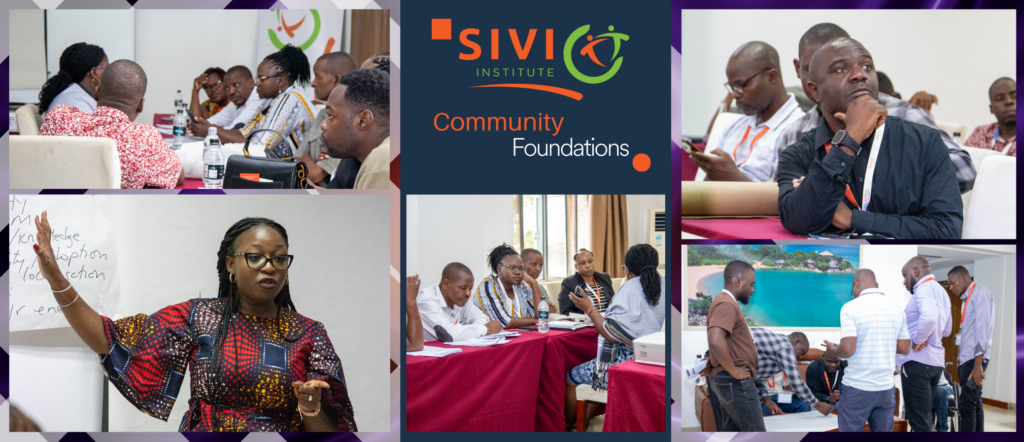
The convening underscored that networks thrive on consistent conversation and open exchange. When members engage regularly through meetings, WhatsApp groups, newsletters, and collaborative initiatives, they keep connections alive and strengthen collective purpose. Equally important was the power of sharing ideas. A particularly engaging session highlighted how both networks and individual organisations have found practical ways to engage government institutions, diaspora communities, and local business leaders in supporting and collaborating on community initiatives. These examples demonstrated not only creativity but also the practicality of community-driven solutions, showing how diverse partnerships can strengthen foundations and amplify their impact
Conclusion
The Malawi–Zimbabwe convening was more than a meeting. It was a reminder that networks are living ecosystems. They grow unevenly, unpredictably, and beautifully. They are made by people long before they are formalised by paperwork. Community philanthropy is alive and growing in both Malawi and Zimbabwe, with encouraging pockets of collaboration that demonstrate how communities can contribute not only financial gifts but also labour, skills, and time. These efforts highlight the power of collective giving and the importance of embedding philanthropy within local structures. At the same time, individual foundations must continue to strengthen their governance systems to ensure smooth transitions, particularly when founders step aside or pass on. Beyond simply registering networks, there is a need for CFs to explore sustainable ways of operating and raising resources through their individual organisations. The success stories shared during the convening were inspiring, yet many remain unknown. This underscores the importance of telling the stories of community philanthropy more widely to reach diverse audiences. Above all, the lesson that emerged is that being self-driven for CFs is key. Without this, community foundations support organisations risk slipping into a donor posture rather than acting as support. CFs need to own the process and lead it; only then can sustainability be achieved.