An Assessment of Zimbabwe’s National Development Stratrgy 1
DOI: 10.59186/SI.9QZJ28SE
Date Published: 17 July 2026
Citation: Muchena, M., Cross, R., & Jowah, E. (2026). An Assessment of Zimbabwe’s National Development Strategy 1. SIVIO Institute. https://doi.org/10.59186/SI.9QZJ28SE
Zimbabwe’s National Development Strategy 1 (NDS1) was never just another policy document — it was the country’s flagship promise to steer the nation toward upper-middle-income status by 2030. Launched in 2021, NDS1 set out bold ambitions: stabilise the economy, expand infrastructure, strengthen social services, deepen governance reforms, and build resilience in the face of climate shocks.
Five years later, the picture is complex.
Our new report, An Assessment of Zimbabwe’s National Development Strategy 1 (2021–2025), takes a clear-eyed look at what the government committed to — and what it actually delivered. Drawing on government data, independent monitoring through Zim Citizens Watch, and insights from citizens themselves, the report unpacks progress across five major clusters: macroeconomic management, infrastructure, governance, social services, and climate resilience.
“The conclusion of the NDS1 on 31 December 2025 provides us with an opportunity to assess the extent of the government’s achievements or failures in aligning with the NDS1.”
Despite gains in areas like road rehabilitation, energy expansion, and selected macroeconomic indicators, citizens continued to face persistent unemployment, rising living costs, fragile social services, and governance challenges. The report highlights where progress was visible — and where commitments fell short of the needs and expectations of Zimbabweans.
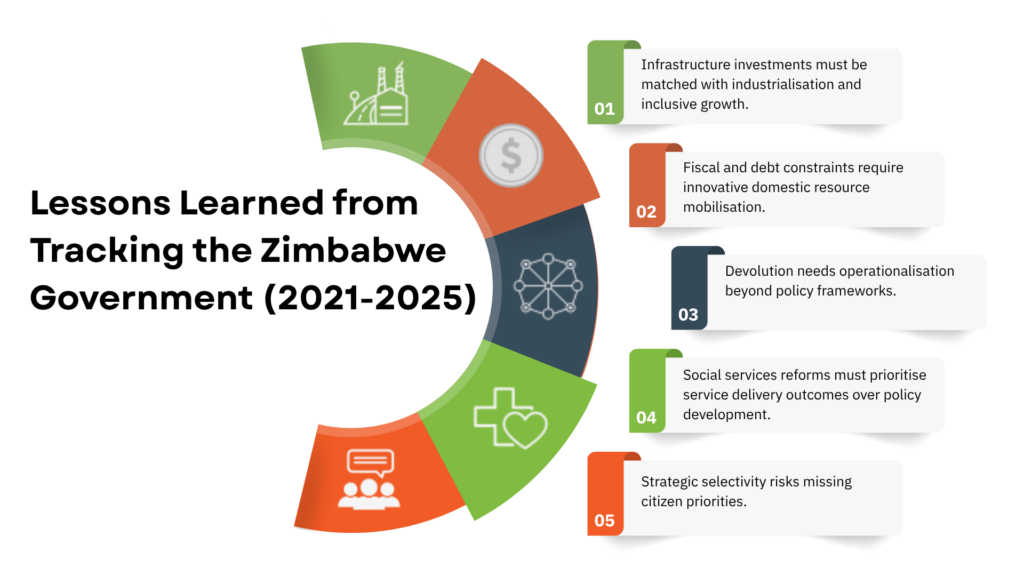
Most importantly, it distils five lessons that should shape the next national strategy, from linking infrastructure to inclusive growth, to strengthening devolution, to prioritising service delivery over policy drafting.
If you care about Zimbabwe’s development trajectory, accountability, and the future of Vision 2030, this is essential reading.