
Governance Challenges in Africa
Governance challenges in Africa are multifaceted, with accountability being a central issue. Despite the occurrence of elections, many African democracies struggle to deliver transformative development, often resembling undemocratic regimes where elites prioritize personal gain over public service. The lack of accountability among public officials has led to stagnation in development, with legislative bodies frequently failing to oversee government actions due to political affiliations. This has resulted in widespread corruption and abuse of power, eroding public trust. To address these challenges, there is a pressing need for citizen-driven initiatives that demand transparency and hold leaders accountable, ensuring that electoral promises translate into tangible actions that benefit the public.
Last week, we asked our followers what they saw as the most pressing problem for governance in Africa.
What do you think is the most pressing problem in African governance systems?
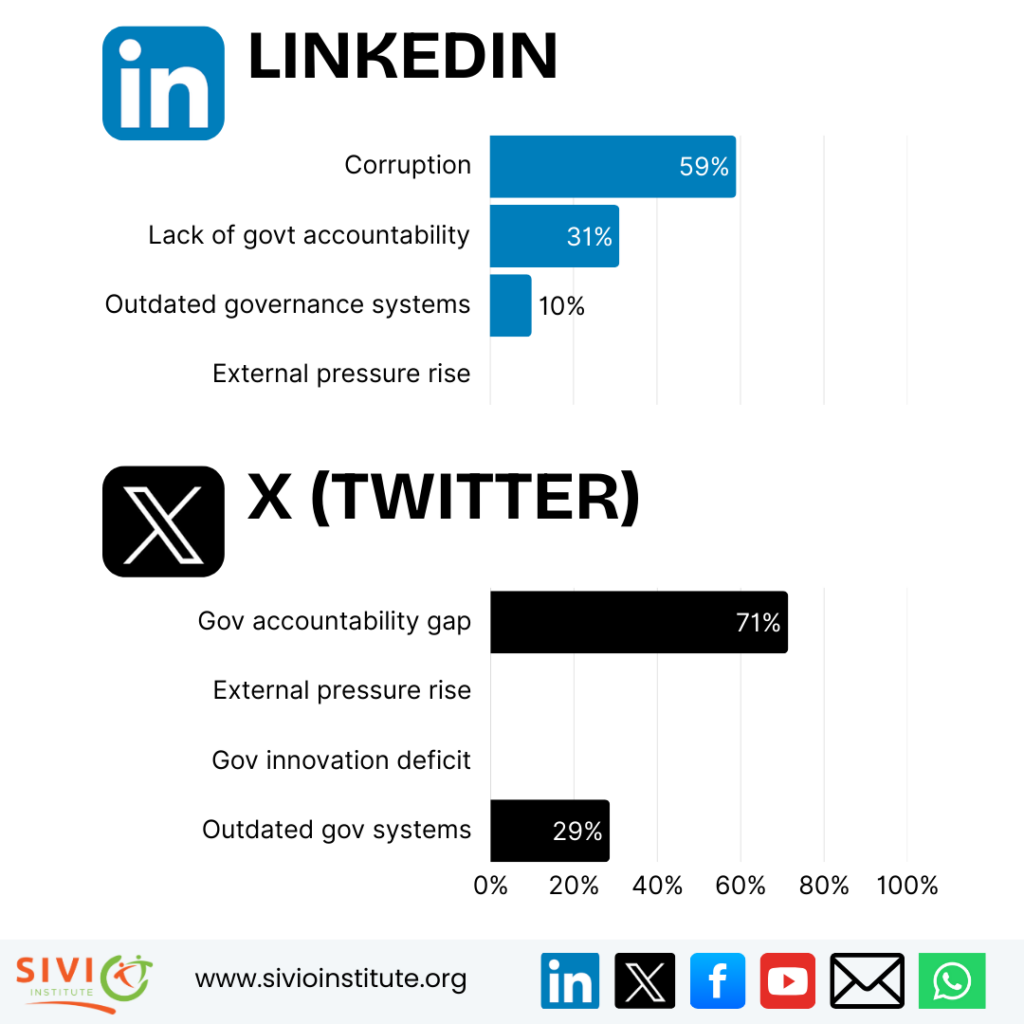
Among the top issues identified are the government accountability gap, pervasive corruption, and outdated governance systems. These challenges hinder the continent’s progress, as leaders often prioritize personal gain over public service, leading to widespread mistrust and stagnation. By addressing these issues, particularly through enhancing accountability, we can pave the way for more transparent, effective, and democratic governance that truly serves the people.
Accountability is the key to overcoming these obstacles.
In 2025, we are placing our faith in citizens to harness their collective energy and unite through various associations and institutions, demanding accountability from public officials at both national and local levels.