

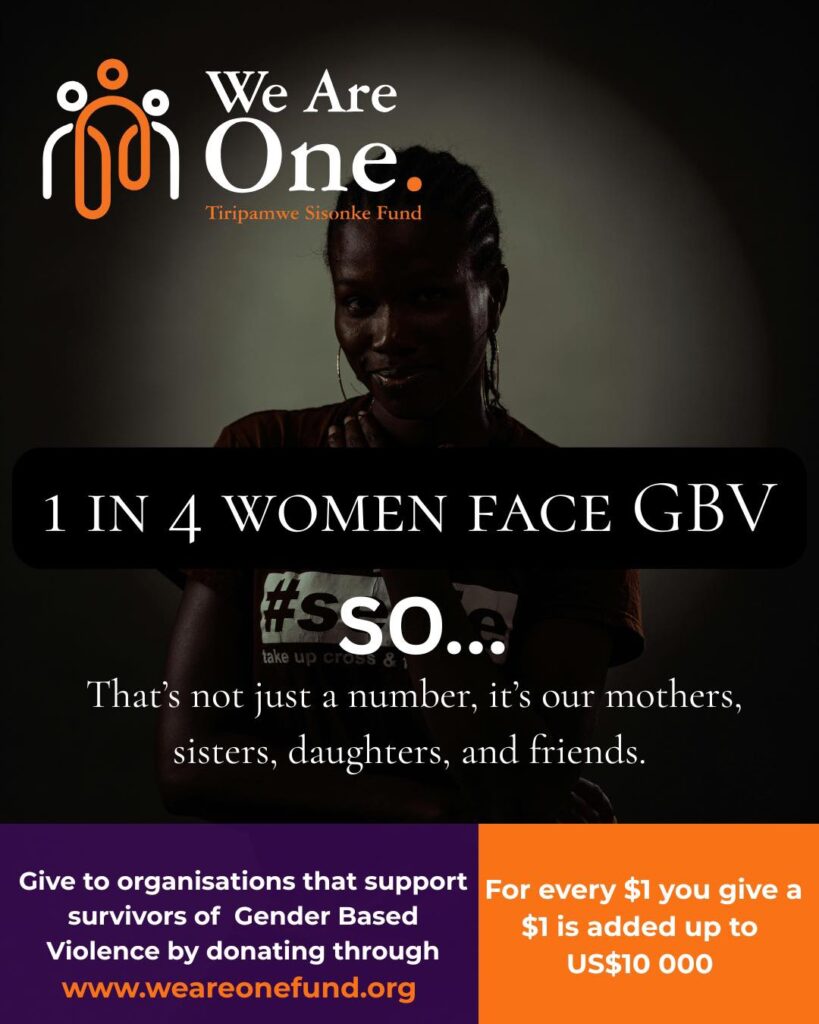
In Zimbabwe today, gender‑based violence is not an abstract statistic — it is a daily emergency. One in four women will experience violence in her lifetime, and behind every number is a woman whose life has been shattered, a family destabilized, a community shaken. And yet, even in the face of this crisis, Zimbabwe has built something extraordinary: a referral system that connects survivors to medical care, counselling, legal protection, and safe shelter. It is a lifeline — but it is a lifeline at risk.
These services are stretched to breaking point. Donors are retreating. Shelters are under‑resourced. Legal pathways are bottlenecked. Medical care is often delayed because the system simply cannot keep up. The very infrastructure that keeps survivors alive is being held together by too few hands and too little funding. And that is where the We Are One Fund steps in.
The Adult Rape Clinic sees more than 1,500 women every month— women who arrive with injuries, trauma, fear, and hope. For just $75, we can cover the full cost of a survivor’s medical treatment: examinations, emergency care, post‑rape prophylaxis, and the essential follow‑up that ensures she can begin to heal. For $60,000 a month, we keep all 14 Musasa shelters open — the only safe refuge many women and children have when fleeing violence. And for $800, we can license a lawyer to practice for an entire year, ensuring survivors have someone standing beside them in court, fighting for justice when they are at their most vulnerable.
These are not abstract investments. They are direct interventions that save lives, restore dignity, and open pathways to safety and justice. And they are only possible through collective giving — through people who refuse to look away, who believe that every survivor deserves protection, care, and a chance to rebuild.
The We Are One Fund exists because no single organisation can carry this burden alone. But together, we can close the financial gap. We can keep shelters open. We can ensure medical care is never delayed. We can put lawyers in the courtroom. We can strengthen the entire referral system so that when a woman reaches out for help, the system is ready to support her — every time.
This is our moment to act. Not out of charity, but out of solidarity. Not because survivors are weak, but because they are strong — and strength deserves to be met with support, not scarcity.
Join us. Stand with survivors. Help us keep Zimbabwe’s GBV response alive. Because when we give collectively, we don’t just fund services — we restore futures. And that is the power of the We Are One Fund.