2025 Citizen Pulse: Views, Priorities, and Expectations of the Government in Zimbabwe
The report captures how Zimbabweans perceive the performance of their government and what they expect from elected officials since the 2023 Harmonised Elections. The findings are drawn from a comprehensive survey of 2,006 citizens, representing all ten provinces.
The findings reveal a country where economic insecurity, limited participation in decision-making, and frustration with corruption continue to shape how citizens judge government performance.
1. Economic insecurity remains a defining reality
Despite macroeconomic improvements, many Zimbabweans continue to face unstable livelihoods.
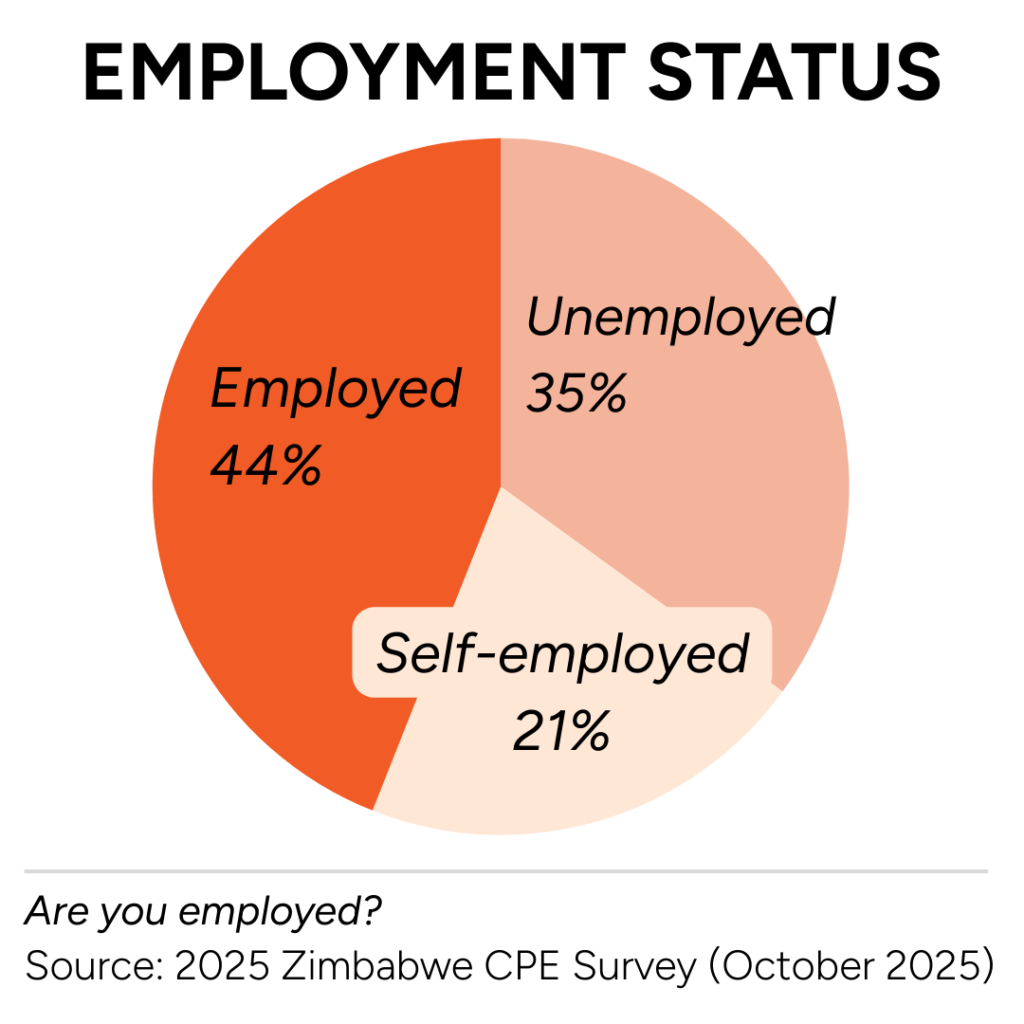
Only 44% of respondents reported being employed, while 35% were unemployed and 21% were self-employed, reflecting the continued dominance of informal work.
Among those who are working, incomes remain low:
- 27% earn US$201–500 per month
- 15% earn US$51–200
- Only 3% earn above US$1,000
- 38% reported having no monthly income in the previous three months
This income profile helps explain why economic issues dominate citizen priorities.
2. The informal economy continues to sustain livelihoods
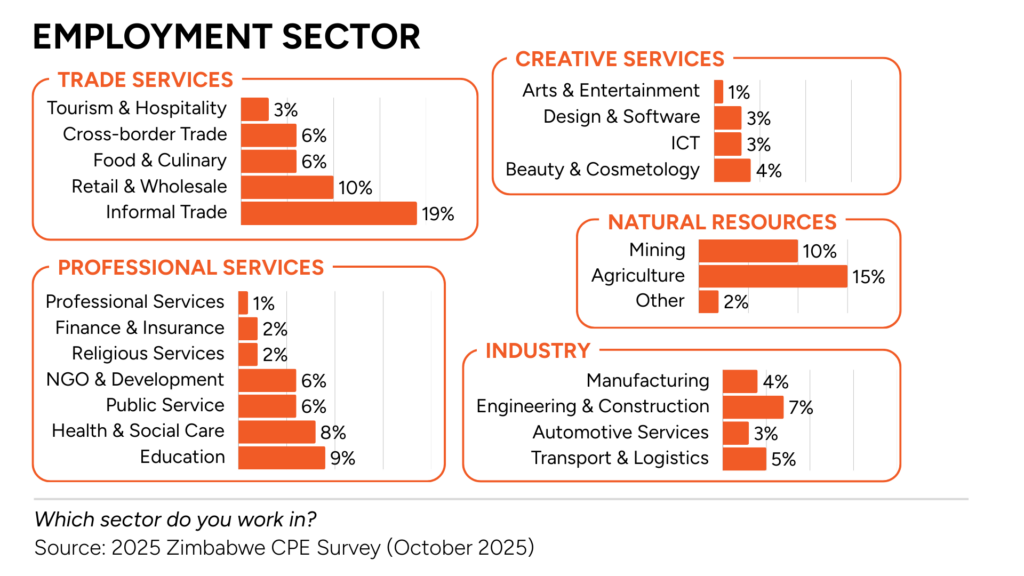
The survey shows how strongly Zimbabwe’s labour market is shaped by informal activity.
Among those employed, the most common sectors were:
- Vending/ informal trade – 19%
- Agriculture – 15%
- Mining – 10%
- Retail and wholesale – 10%
- Education – 9%
The prominence of vending highlights how citizens continue to rely on informal economic activity in the absence of sufficient formal job creation.
3. Citizens remain largely excluded from policymaking
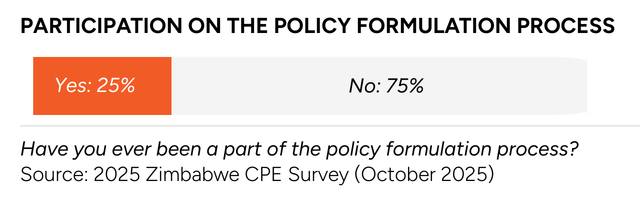
A striking finding is how few citizens participate in policy processes.
75% of respondents said they have never participated in any policy formulation process, while only 25% reported any involvement.
This pattern has remained consistent across previous surveys, suggesting that many citizens feel excluded from national decision-making.
Even where opportunities exist, citizens perceive limited space for engagement:
- 65% say there is no room to participate in budget approvals
- 67% say there is no room to participate in national policy consultations
- Participation opportunities appear somewhat better at local levels.
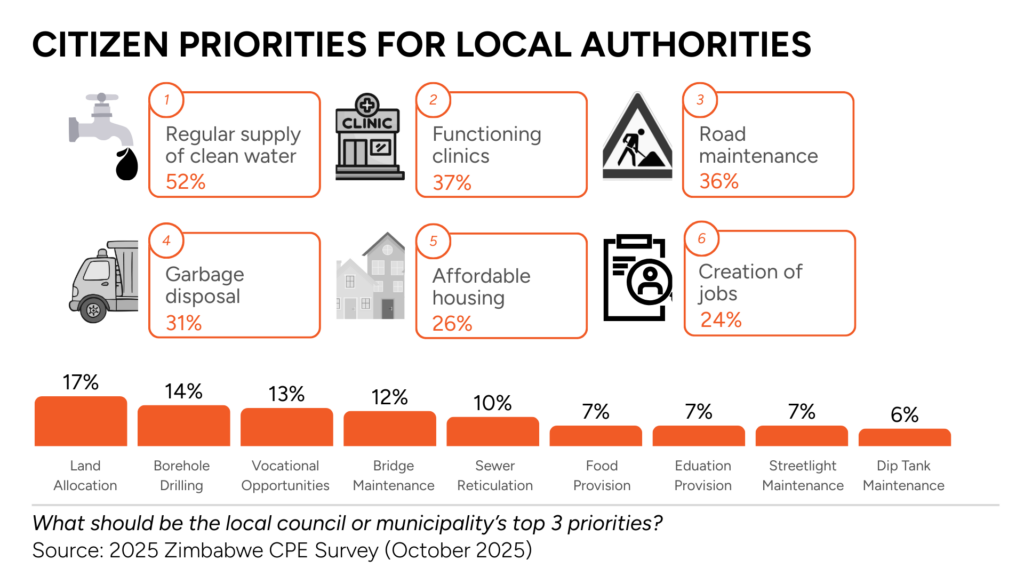
4. Citizens prioritise basic local services
When asked what local governments should focus on, respondents overwhelmingly pointed to core service delivery issues.
The top priorities were:
- Reliable clean water supply – 52%
- Functioning clinics – 37%
- Road maintenance – 36%
- Garbage collection – 31%
- Housing stands – 26%
These priorities show that citizens judge local government primarily on basic infrastructure and services that directly affect daily life.
5. Job creation is the single biggest national priority
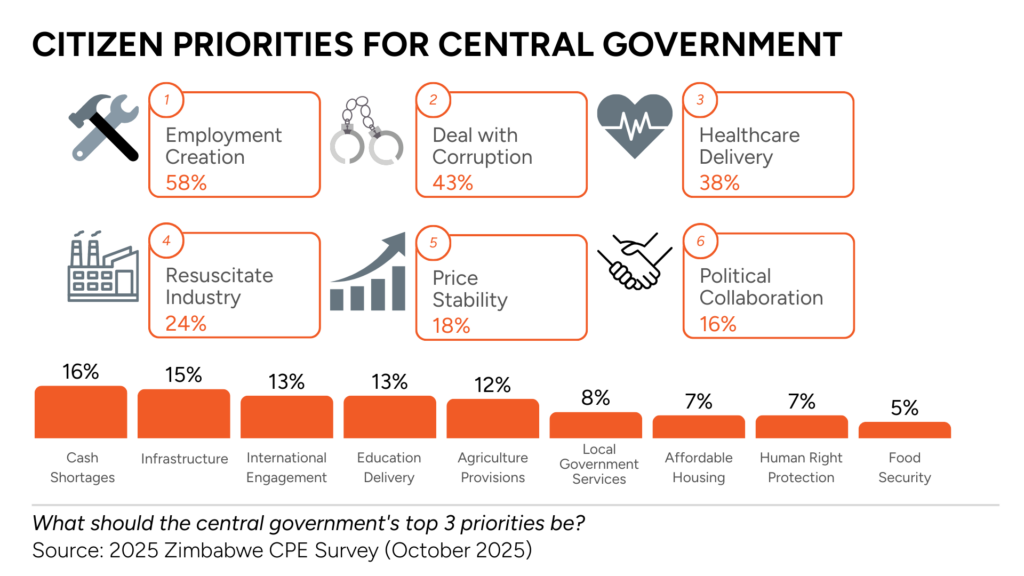
When asked what the central government should focus on, citizens were clear.
The top national priorities are:
- Job creation – 58%
- Addressing corruption – 43%
- Improving healthcare – 38%
Employment has consistently ranked as the most important issue across CPE surveys since 2018, highlighting persistent economic anxiety among citizens.
6. Corruption is seen as the biggest obstacle to effective government
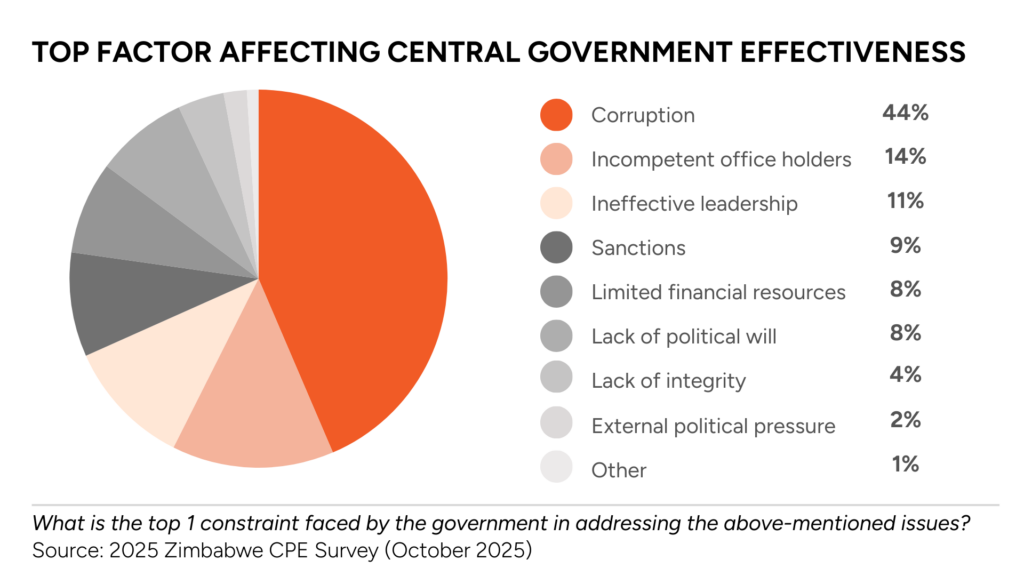
Across both local and national government assessments, citizens consistently pointed to corruption as the main barrier to effective governance.
- 38% say corruption is the biggest obstacle to local government performance
- 44% say corruption is the biggest obstacle to central government effectiveness
This indicates that citizens see governance challenges primarily as internal institutional weaknesses rather than external constraints.
7. What success looks like for citizens
When asked how they would know the government is succeeding, citizens pointed to tangible improvements in daily life.
The most common indicators were:
- Working industries – 22%
- A functioning health sector – 18%
- Well-paying jobs – 18%
These responses highlight a clear message: citizens judge success primarily through economic opportunity and service delivery outcomes.
Conclusion
The 2025 CPE survey paints a picture of citizens whose priorities remain grounded in everyday realities: jobs, functioning services, and accountable governance.
While perceptions of government performance have become slightly more moderate, the underlying concerns remain unchanged. Economic insecurity, limited participation in decision-making, and frustration with corruption continue to shape how citizens evaluate leadership and policy.
For policymakers and civic actors alike, the message from citizens is consistent: progress will ultimately be judged not by policy announcements, but by visible improvements in livelihoods and service delivery.