NEWSLETTER
Issue 3 | July – September 2026
Back to the Agora
Democracy is not decided only on election day. It is shaped in the spaces where citizens, organisations and institutions come together to question, contest and decide. This quarter, we spent our time in those spaces: in Johannesburg, Harare, Lagos, Montréal and London, in virtual forums that carried our work beyond any single venue, and in earlier conversations we returned to because their questions remain unresolved.
In our previous Issue, we named the middle ground as our Big Bet for 2026, a space where dialogue takes precedence over division. Nine months on, we can describe what that looks like in practice. It resembles the agora of the classical tradition: an open public space where people shape the matters that affect them, rather than receiving decisions made on their behalf.
Q3 was our quarter of showing up. We convened, we listened, we contributed, and we brought older conversations back into circulation. What follows is an account of that work, and of the argument running through it: accountability, giving, and democratic agency are different expressions of the same civic practice.
Changemakers Junction: A New Voice Joins the Family
It started with a question we couldn’t stop asking: What if we think differently?
That question became a podcast, the What If… We Think Differently? Podcast Series, which remains the heart of our conversation about Africa’s future. Over time, it became something bigger, a parent to every conversation we have since wanted to start. This quarter, the family grew.
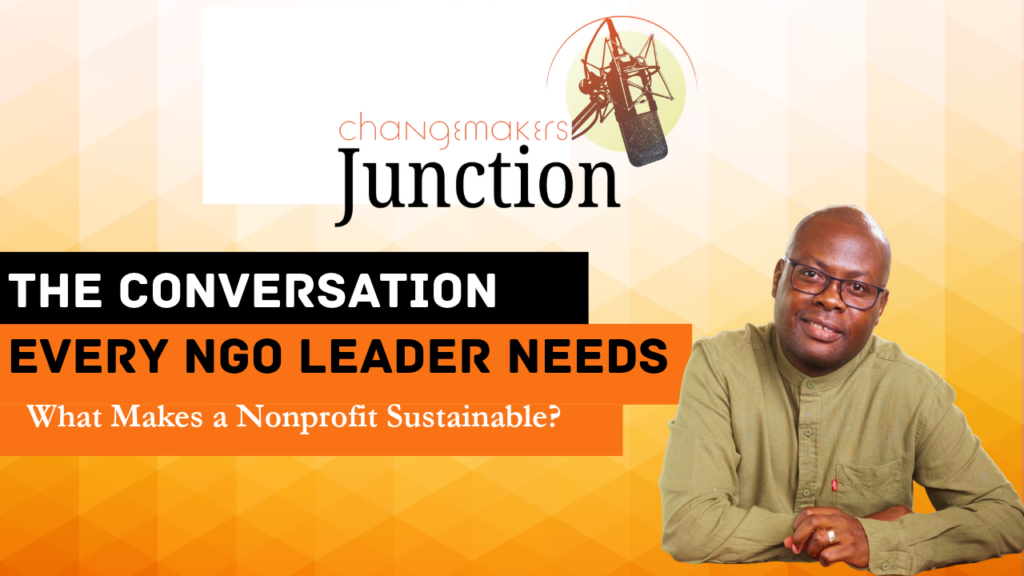
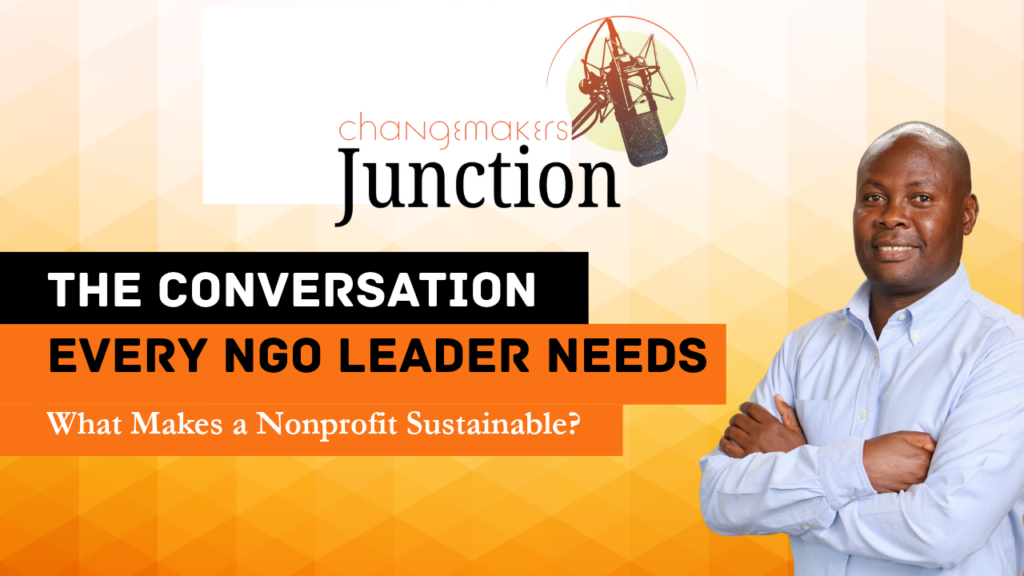
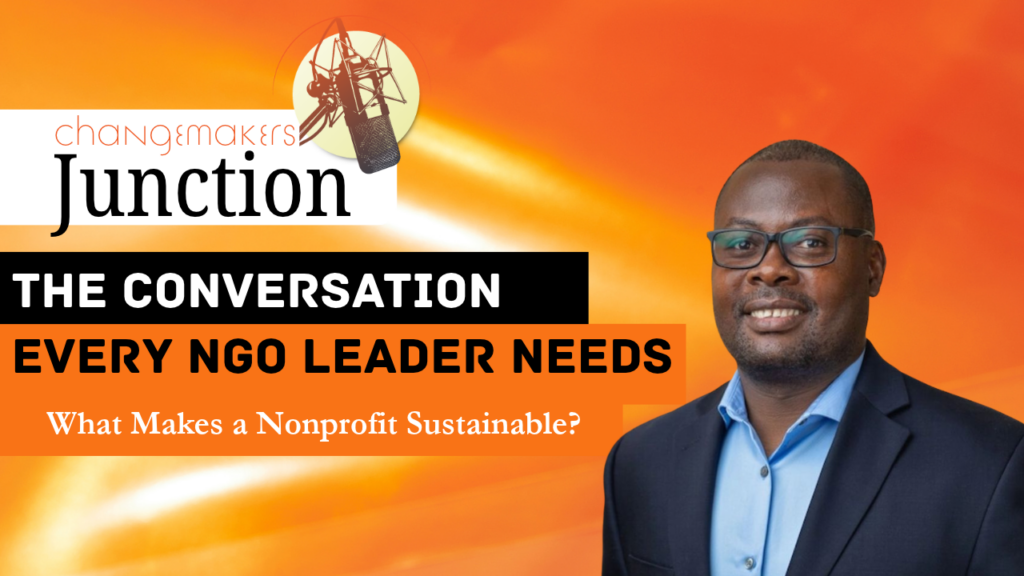
Meet Changemakers Junction
It began quietly, as a blog. A place to think out loud about civil society, about sustainability, and about what it really takes to build organisations that outlast the next funding cycle. The writing was honest, and the questions were uncomfortable. Readers did not just read; they answered back. The conversation outgrew the page, and a conversation like that deserves a stage.
So we gave it one. The Changemakers Junction Podcast takes the same depth and puts real voices behind it. It is a space for practitioners and leaders to say aloud what the page could only suggest, and for anyone committed to a stronger civil society to listen in, push back, and join the conversation. The blog gave us the foundation. The podcast is where it starts to talk.
The Exchange-Junction
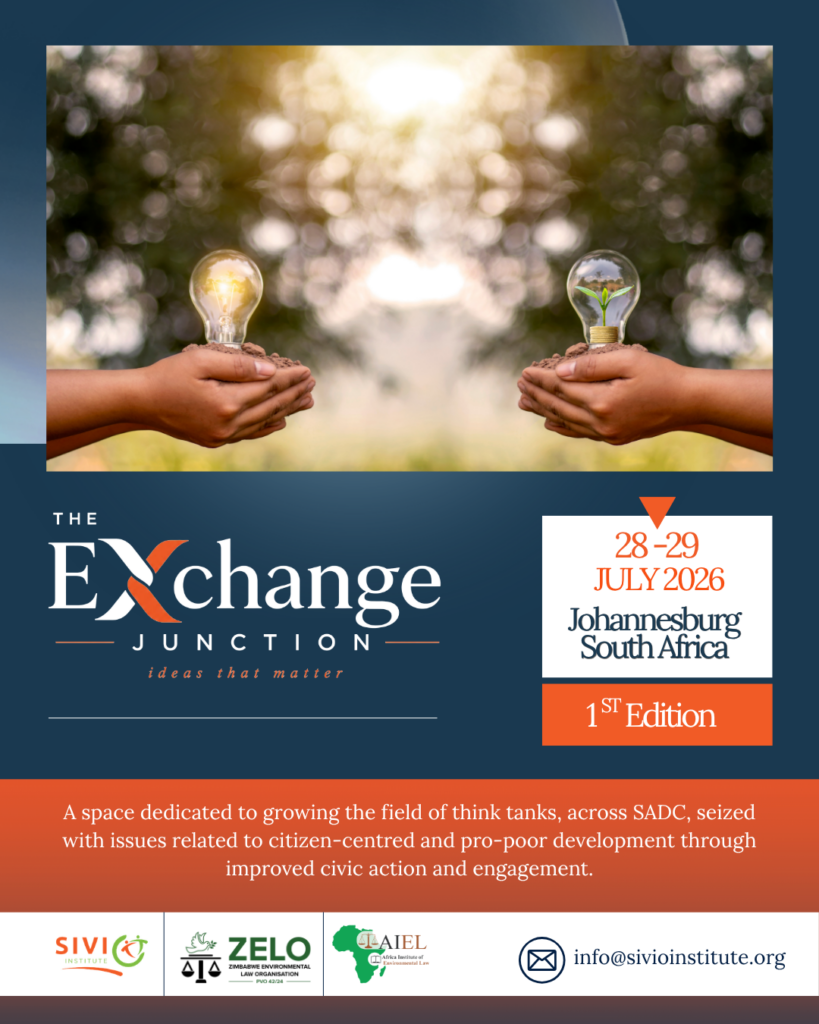
This journey from the written word to the spoken one has led us to a realisation: that the most profound insights are often found not in reports or articles alone, but in the candid, unscripted exchanges between peers. We write a great deal, and that is important. But sometimes, it is equally important to hear it straight from the horse’s mouth.
This realisation is what led us to The Exchange-Junction.
The Exchange-Junction is not a standard academic symposium. It is the natural evolution of our commitment to moving past theoretical discussion and into the realm of actionable solutions. In July, policy research organisations, advocates, and civil society leaders from across Southern Africa gathered in Johannesburg for The Exchange-Junction. We built two days around peer learning, candid reflection, and solving problems together.
The timing was no accident. Donor priorities are shifting, civic space is tightening, and the traditional playbook for running a non-profit is being rewritten as we speak. So, we organised the gathering around the two sides of the question we had just asked on air. Internally, how do institutions stay resilient in how they fund themselves, keep their people, and govern? Externally, how do they keep shaping policy when the space to do so is narrowing?
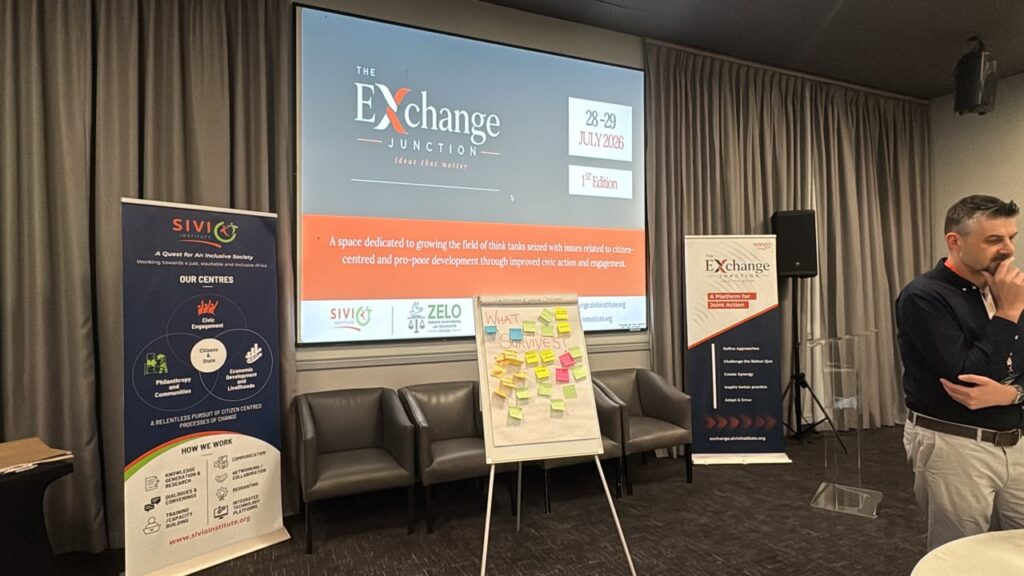
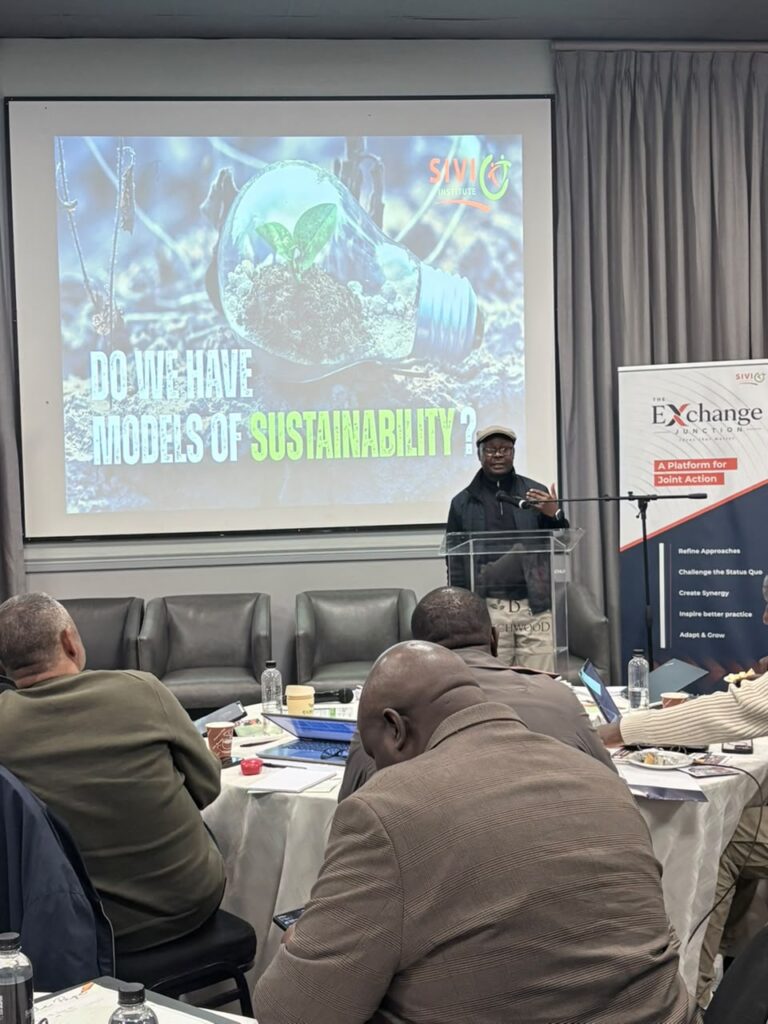
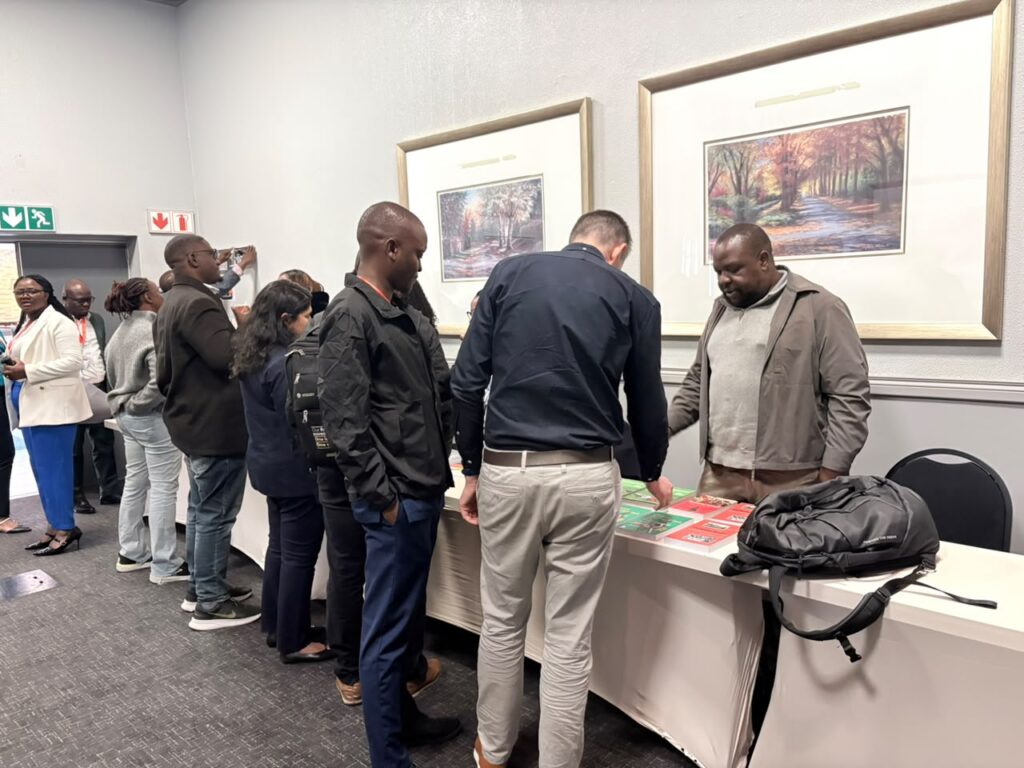
What came out of those rooms was less a set of speeches than a set of agreements. Participants built consensus, learned from one another, and mapped pathways for pushing the SADC region towards more inclusive and equitable societies. The alliances formed there are meant to outlast the two days.
If one idea tied the conversations together, it was this: no organisation survives or influences, alone. Resilience and impact both depend on who stands with you.
Learning to Fundraise: Why Now, and Where to Start
The Exchange-Junction left us with one conviction: no organisation survives alone, and the ones that last are the ones with people beside them. But the conversations in Johannesburg kept circling a quieter problem. Many of the organisations in that room had the purpose, the community trust and the programmes. What they lacked was a structured way to ask for support.
That gap is felt most sharply by community foundations. They know their neighbourhoods intimately, yet many have never had a practice for turning local goodwill into sustained resources. For years, that was an inconvenience. With donor priorities shifting and funding contracting, it has become a risk. When the money dries up, communities lose real programmes and real people.
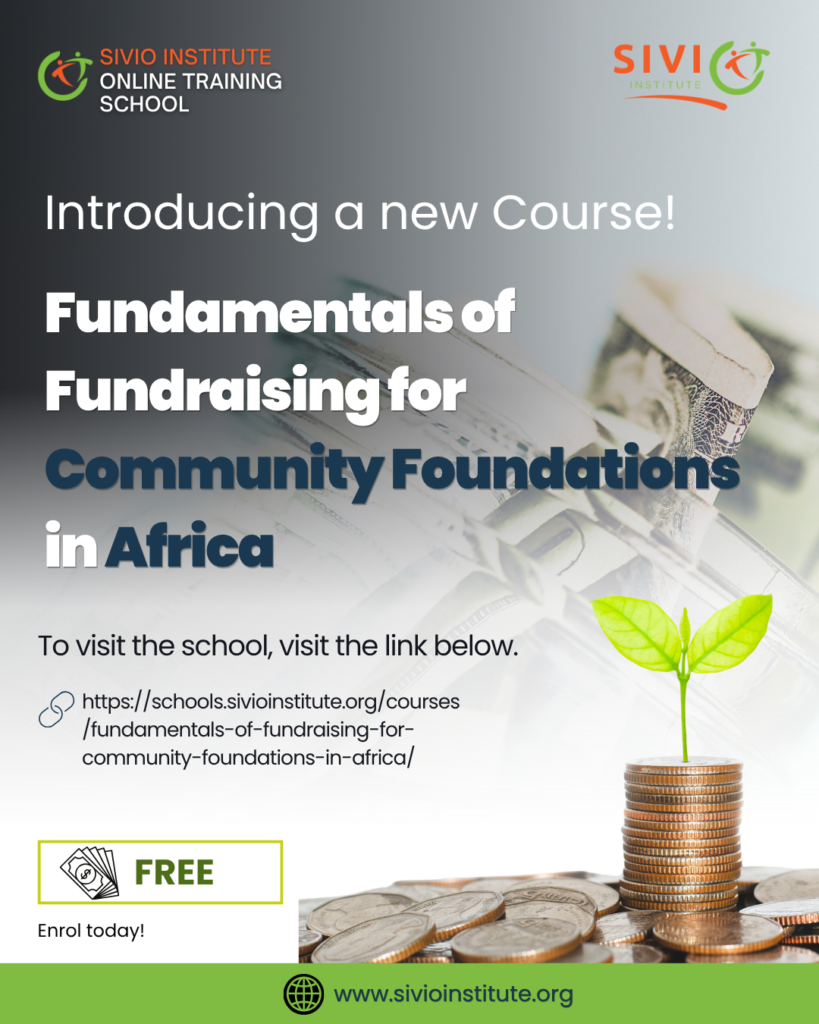
That is why we introduced Fundamentals of Fundraising for Community Foundations in Africa. If you are building, leading or supporting a community foundation and this gap sounds familiar, this course was designed for you. You can register today, learn at your own pace and in your own time, and it is entirely free.
Learning how to ask is only half of the work, though. The other half is giving people a reason to say yes, and a way to do it. That is what we have been doing at AfricaGiving, one campaign at a time.
The Joy of Giving: Looking Back at How Far We Have Come
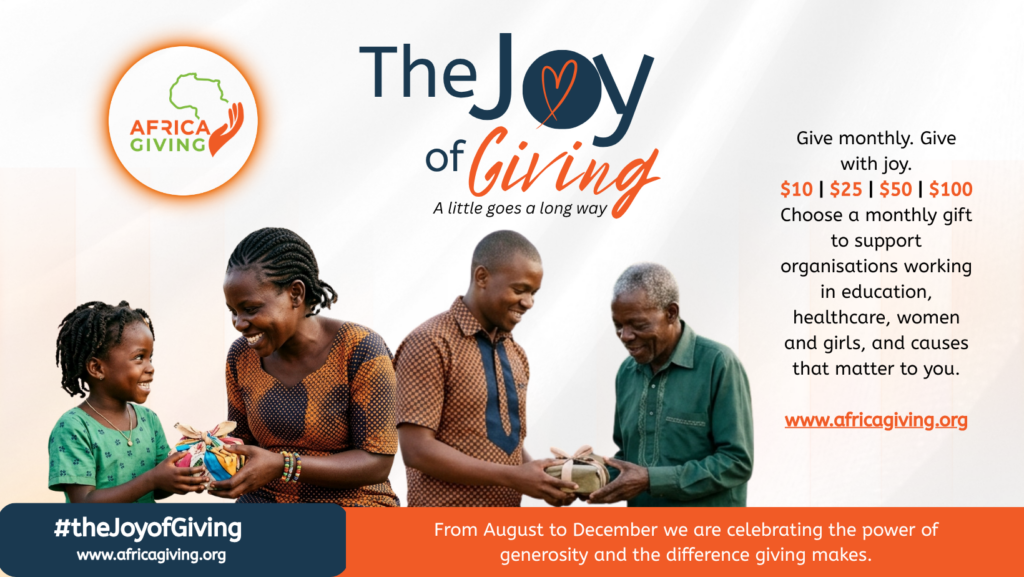
There is a Shona proverb that says it better than we can: Kupa kune mufaro kunokunda kugamuchira. There is far more joy in giving than in receiving.
At AfricaGiving, we have run campaigns back to back, each one helping an Africa-based non-profit move the needle on a cause it lives and breathes. We raised funds so that period poverty would not cut a girl’s growth short. We raised school fees, and people gave because someone once paid for their own schooling and could not hesitate to do the same for the next generation. We bought a mattress so that a child no longer had to sleep close to cold cement. None of these gifts was large. Each changed a life.
This quarter, we paused to look back at that journey through our Joy of Giving initiative. Behind every figure is an individual/ company who refused to wait for someone else to build the future they wanted to see.
The idea behind it is simple. Generosity is not a sombre duty or something driven by guilt. It is a celebration. Across the continent, people and organisations are tackling poverty, protecting ecosystems, saving lives and restoring dignity every day, and the desire to support them exists in our neighbourhoods, across the diaspora and in our daily networks. What has often been missing is clarity on where to start, whom to trust, and how to make a direct impact. AfricaGiving exists so that none of that is a puzzle.
The change you want to see starts with a single gift. Join our Joy of Giving campaign by choosing an organisation that moves you and helping transform a life.
Digging Deeper on International Day of Democracy
The Joy of Giving rests on a belief that ordinary people do not wait for permission to act. On International Day of Democracy, we asked what that belief means for democracy itself.

This year, we took it back to where we began: the early episodes of our podcast based on Rethinking Citizens and Democracy, a book by our Executive Director, Dr Tendai Murisa.
His starting point was that the ballot box answers who governs, but not how. For him, the more telling questions sit between elections. Who is in the room when priorities are first set? Who can afford to dissent when land and livelihood depend on political goodwill? And what do citizens do for one another when neither the state nor the market comes to their aid? His answers, drawn from everyday cooperation and mutual support, describe a democracy built from below as much as it is administered from above.
The response told us something. Across Facebook and LinkedIn, the conversations drew an engagement rate of over 10%, a signal that many of you wanted to dig with us, not merely scroll past. We said we would go deeper than the surface.
Curious to go deeper?
Prefer to listen?
The conversations are also audiovisual, so you can get a feel for the ideas before you commit to the pages.
The work of democracy is not a day on the calendar. It is the daily practice of building a society where citizens are not spectators, but authors.
Taking Our Story to Montréal
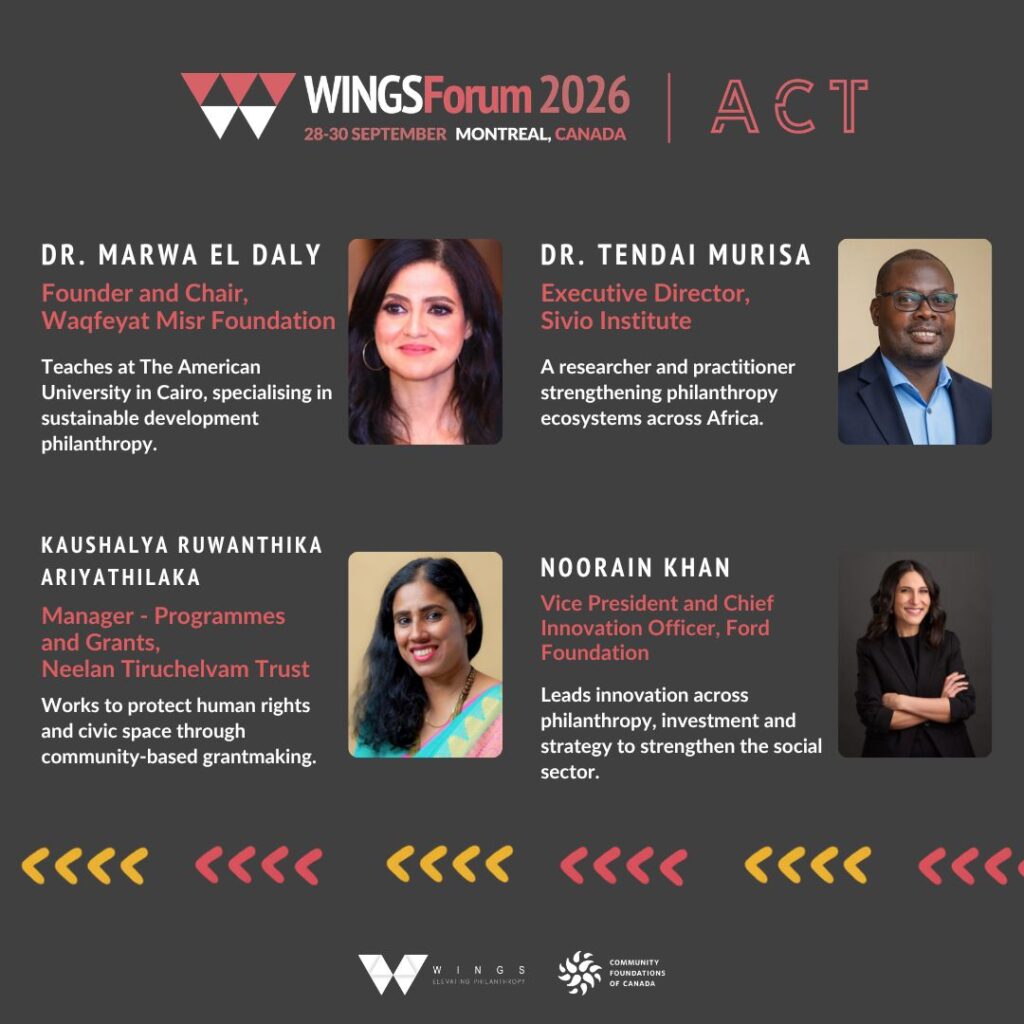
The International Day of Democracy ended with a question about who gets to shape the agenda. That question does not stop at national borders, and neither does the answer. Our Executive Director, , carried the conversation to Montréal, Canada, for the WINGS Forum, where he spoke on building philanthropy’s future.
The panel started from a simple premise: the future of philanthropy looks different depending on where you sit. In scholarship, in national grant-making, in pan-African research, or in rethinking how giving itself works, each vantage point brings its own questions.
Being in that room mattered for two reasons. African perspectives belong in the global conversation on philanthropy, not only as case studies but as authors. And what we heard there, on local giving and the infrastructure that supports it, sharpened the work we are doing closer to home.
Why We Keep Score
Montréal left us with a question: if African voices are to help author the future of philanthropy, what do we bring to the table besides conviction? Our answer is evidence.
Giving and governance are two sides of the same question, which is who is accountable to whom, and that is why we publish Barometer reports. We published two this quarter.
People sometimes assume we release them out of habit. We do not. Every year we measure how governments perform against what they promised, because a promise left untracked is easily forgotten, and citizens deserve a record that outlasts the news cycle. Our barometers aggregate government performance scores in Zambia and South Africa, and each gives citizens evidence to carry into the conversation.
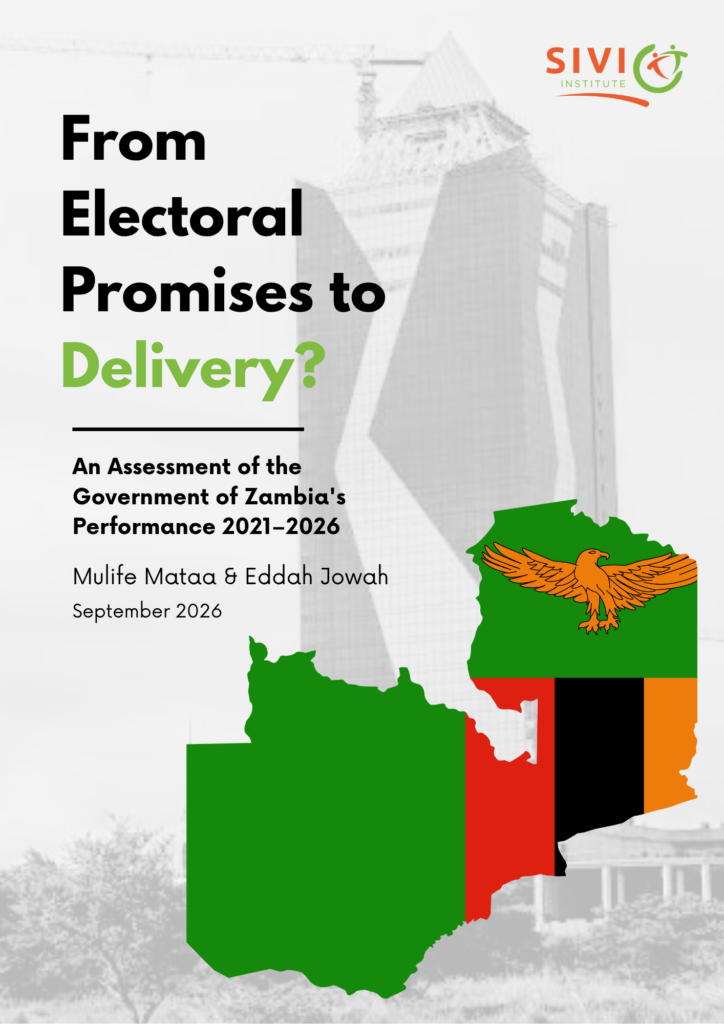
Zambia: From Electoral Promises to Delivery. This assessment asks whether the Government of Zambia kept the commitments it made in the 2021 elections. It follows how those promises became policies, programmes, reforms, and measurable outcomes across the UPND’s five-year term, using data from the Zambia Citizens Watch Tracker, a public accountability platform built under African Citizens Watch.
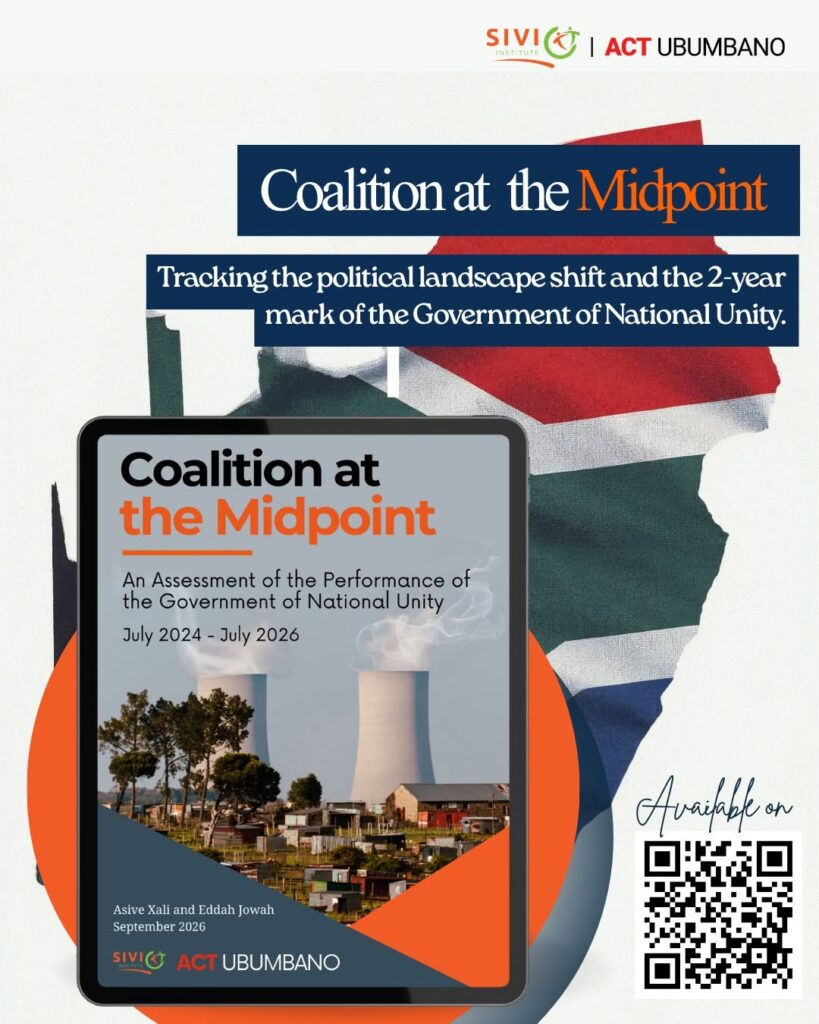
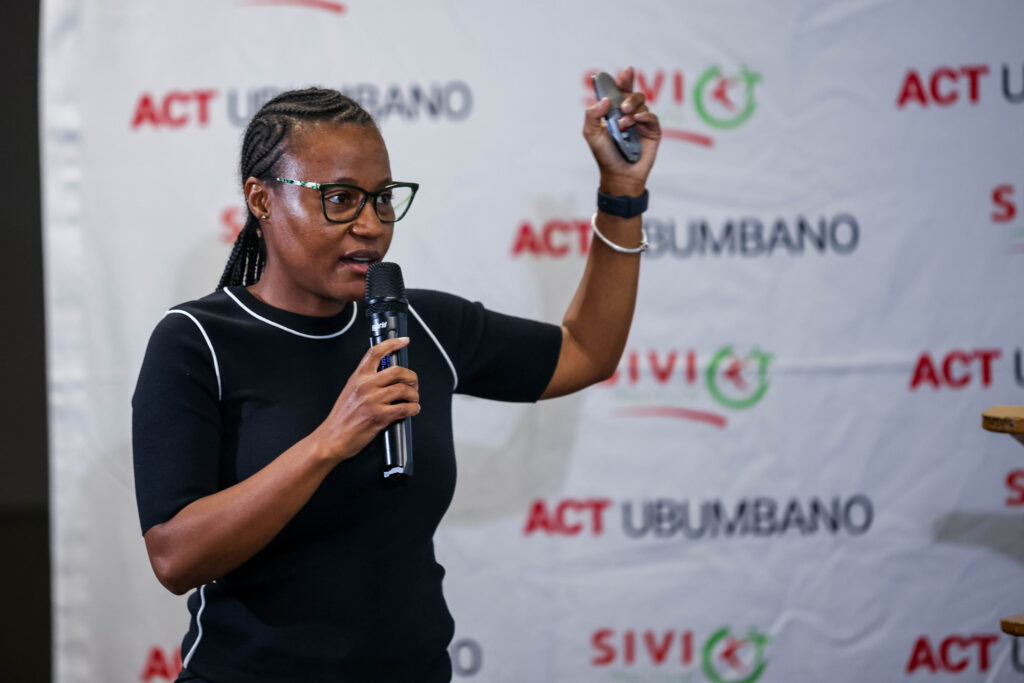
South Africa: Coalition at the Midpoint. With ACT Ubumbano, we launched this report in Johannesburg. The 2024 election produced a Government of National Unity, parties with different priorities bound to one shared programme. Two years on, the question has moved from what was promised to what has been delivered. We are tracking 120 promises across the economy, governance, corruption, climate change, and social services, because announcements matter, but at the midpoint, implementation is what counts.
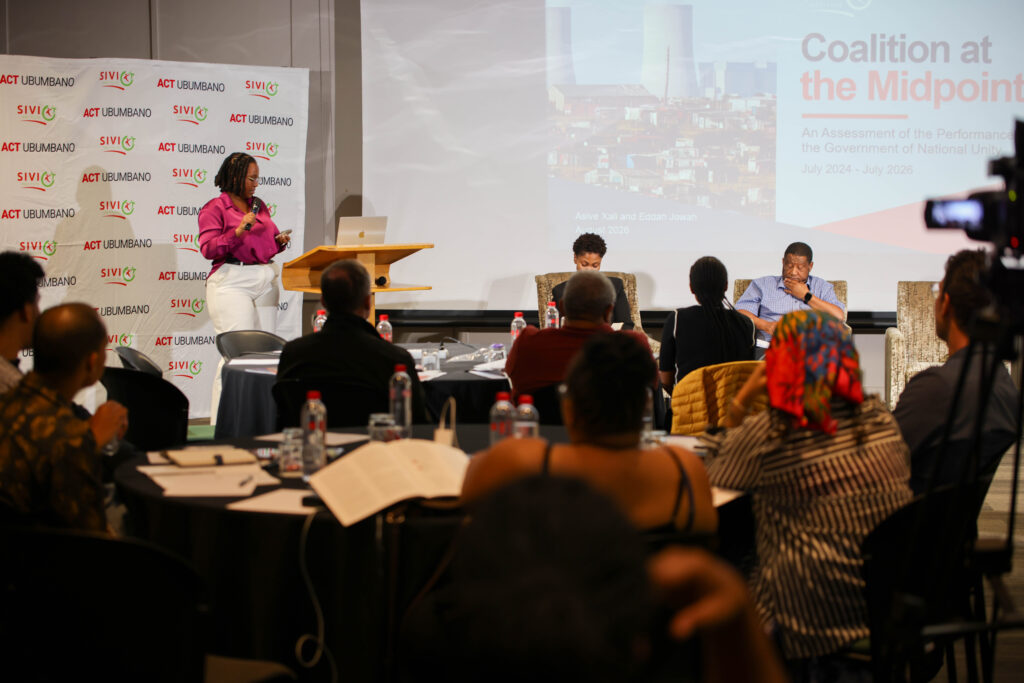
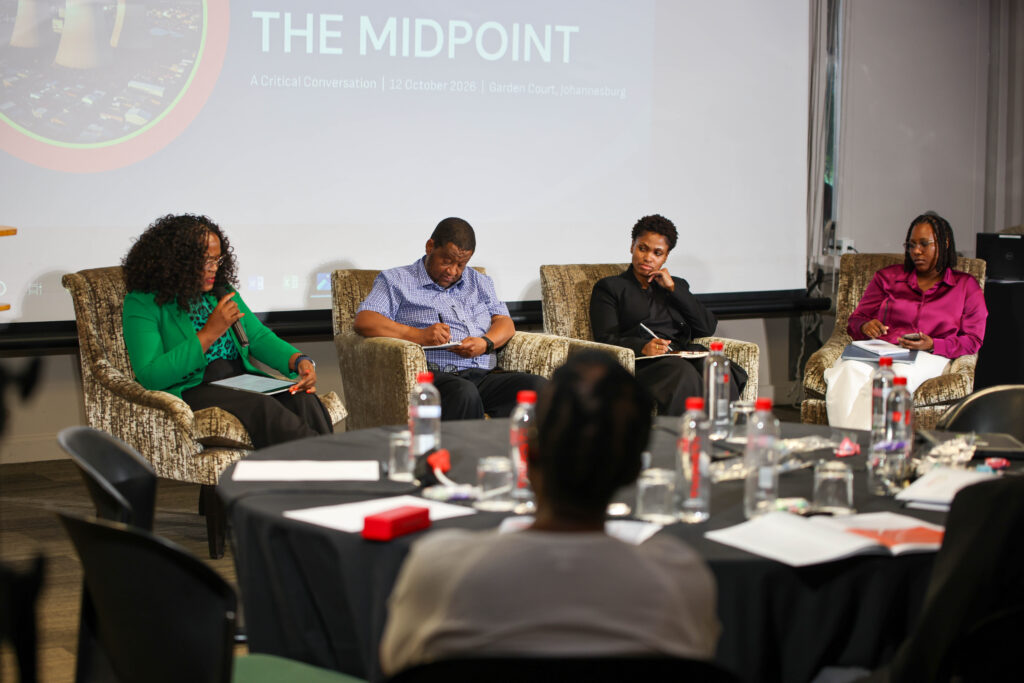
Elections are one moment in the democratic cycle. Accountability is the work that follows.
Landing in Lagos: Have We Been Fighting the Wrong Battle?
If the barometers ask whether governments keep their promises, Lagos asked why holding them to account has proved so hard. In September, we travelled to Nigeria for the High-Level Dialogue on Anti-Corruption and Accountability,convened by Centre for Leadership, Strategy & Development (Centre LSD) with CAPSI at Wits Business School and support from the Open Society Foundations. Our Executive Director moderated one of the dialogue’s panels.
The theme was deliberately unsettling: Have we lost the anti-corruption and accountability debate? After three decades of laws, agencies, reforms and donor-funded interventions, state capture and illicit financial flows persist. The idea that kept surfacing was that corruption cannot be understood outside the architecture of power. Who controls political and economic power? Who writes the rules, and who benefits when they are broken? Participants asked whether the struggle has become too institutional, who guards the guards, and whether democracy can survive without public legitimacy.
The conclusion was not despair. Africa hasn’t necessarily lost the battle, but it needs to rethink what it is fighting and where power resides. Accountability is bigger than anti-corruption, and it comes back to the same question: who holds power, in whose interest, and what happens when it is abused? That is the question our barometers, trackers, and citizen-engagement work exist to answer.
Back Home in Harare: Beyond the 10%
Power, as Lagos reminded us, is often decided by who controls resources, and in much of Africa the oldest resource is land. That is why the 22nd Annual CAADP Partnership Platform meeting in Harare spoke so directly to our work. Our Executive Director moderated there too, in a room of policymakers, researchers, regional bodies and civil society.
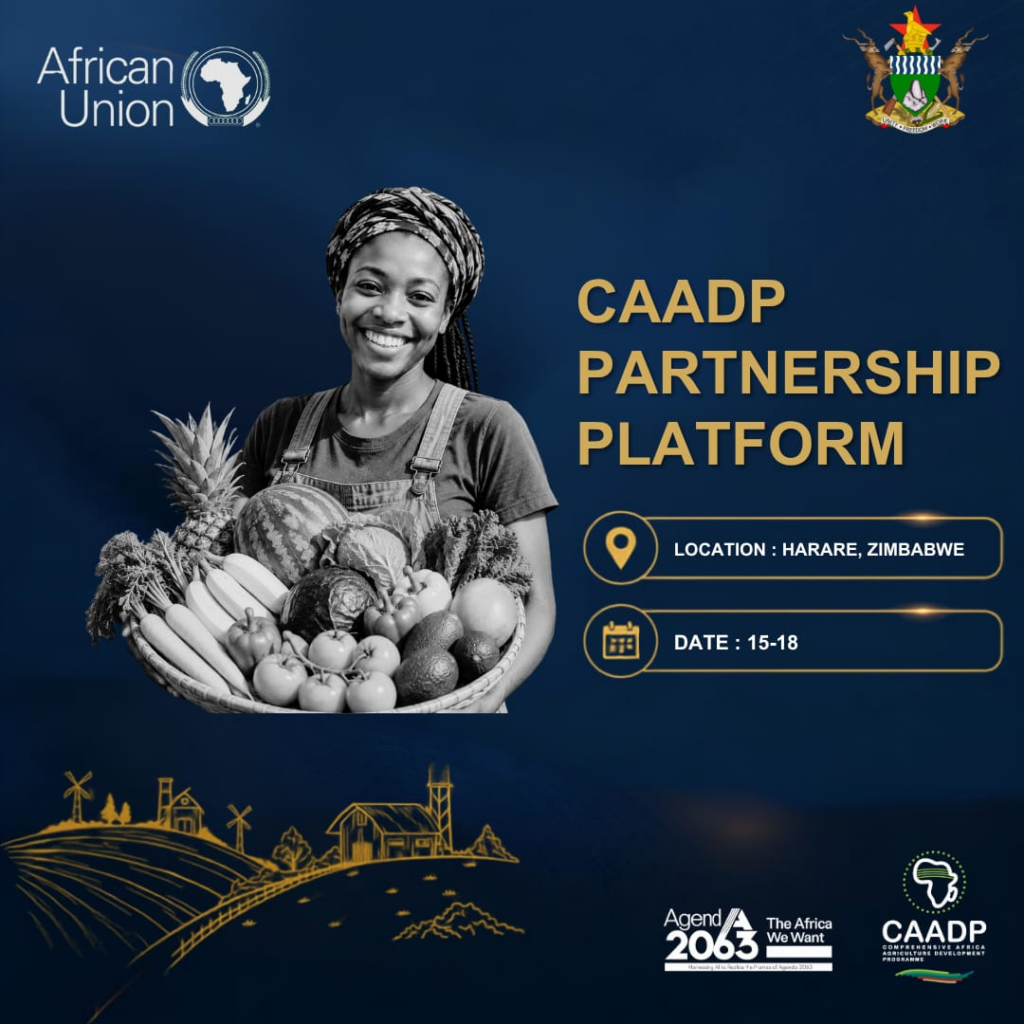
Across the second day, three tensions stood out:
- Producing for whom? Delegates were frustrated by farmers producing without reliable markets. The call was to train agri-preneurs, not just producers, and to treat young people as co-implementers rather than passive beneficiaries.
- Regional or nothing. Value chains, trade corridors and frameworks like the African Continental Free Trade Area (AfCFTA) and the Common Market for Eastern and Southern Africa (COMESA) were positioned as keys to unlocking intra-African trade. Zimbabwe’s Strategic Grain Reserve featured as a case study.
- Outcomes over slogans. The debate over the Maputo target, 10% of national budgets for agriculture, kept returning to quality as much as quantity. Success should be judged by healthier diets and resilient communities, not by what looks good on paper.
For our Centre for Economic Development and Livelihoods, this validated the premise behind our agriculture tracker. Measuring whether governments hit the 10% isn’t enough. The question is whether households are better off for it, and that cannot be answered without confronting the agrarian question: who controls land, who benefits, and how power is organised around both.
Solidarity as Practice: London and Beyond
The same question, about who holds power in a relationship, travelled with our Programs Manager, Eddah Jowah, to London for the European Solidarity Hub. More than 30 civil society and philanthropy practitioners from Southern Africa and Europe gathered against a backdrop of rising right-wing politics, anti-immigrant sentiment, shrinking civic space and funders turning inward.
Beneath the uncertainty, the Hub saw real signs of change, including growing numbers of leaders from the Global South and diaspora communities in European civil society and philanthropy. Four reflections stayed with us:
- Solidarity must go beyond funding to shared learning, mutual accountability, and standing together in uncertain times.
- Power is beginning to shift, but unevenly.
- Global challenges need alliances that cross regions rather than reinforce the North-South divide.
- In a period of declining funding, relationships matter as much as resources.
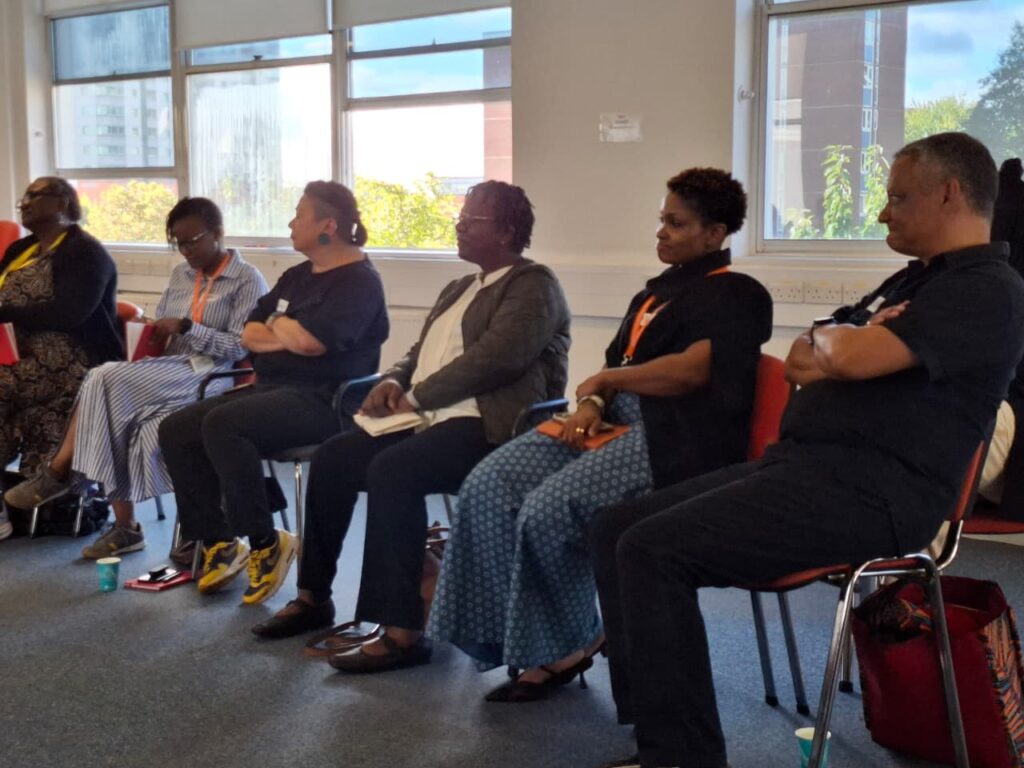
The most valuable part was the inward look. Organisations in the South were invited to consider how funding relationships can reinforce independence, and organisations in the North to consider how decision-making power can be shared. Solidarity, the Hub concluded, is not a destination. It is a continuous practice.
Building Local Roots: Mozambique and Beyond
If solidarity is a practice, local philanthropy is where it takes root. In September, stakeholders from across Mozambique’s philanthropy ecosystem met to chart a roadmap for strengthening local giving. The workshop was supported by WINGS, the Aga Khan Foundation, La Caixa Foundation and local partners, and built on a mapping study of the ecosystem’s strengths, gaps and opportunities. We contributed to the mapping and the stakeholder discussions, and the meeting turned findings into practical steps toward a more connected, resilient environment for giving.
The process is about more than philanthropy. It is about civic participation, local ownership, and a development ecosystem that can sustain itself. That is the same logic we championed at The Exchange-Junction and Montréal.
It was also the message Nontsikelelo Nzula, our AfricaGiving and We Are One Fund coordinator, carried to Terre des Hommes Switzerland’s Knowledge Camp 2026, themed “Not a Talk Shop: Knowledge in Motion.” On a panel on alternative resourcing and sustainability, she spoke for AfricaGiving on how generosity already exists in communities and can be intentionally nurtured. Her advice to practitioners in Zimbabwe and South Africa was to build relationships with individual supporters, create giving opportunities that resonate locally, earn trust, and value everyday acts of generosity. Organisations that do this reduce their dependence on traditional donors and deepen their ties to the communities they serve.
Until the Next Issue
Look back across the quarter, and the pattern is plain. A symposium, a keynote, a launch in Johannesburg, a dialogue in Lagos, a platform in Harare, a hub in London: each was a different way of occupying the same square. We believe the middle ground we bet on in January is not an empty space between two sides. It is the agora, and it only exists when people show up.
So here is our invitation. Listen, read, enrol, give, or simply join the conversation.
Give today
Help us grow our reach and join our quest for an inclusive society. Join a growing community of supporters committed to shaping a better future in Africa.